Ritoban Mukherjee
Dec 11, 2025
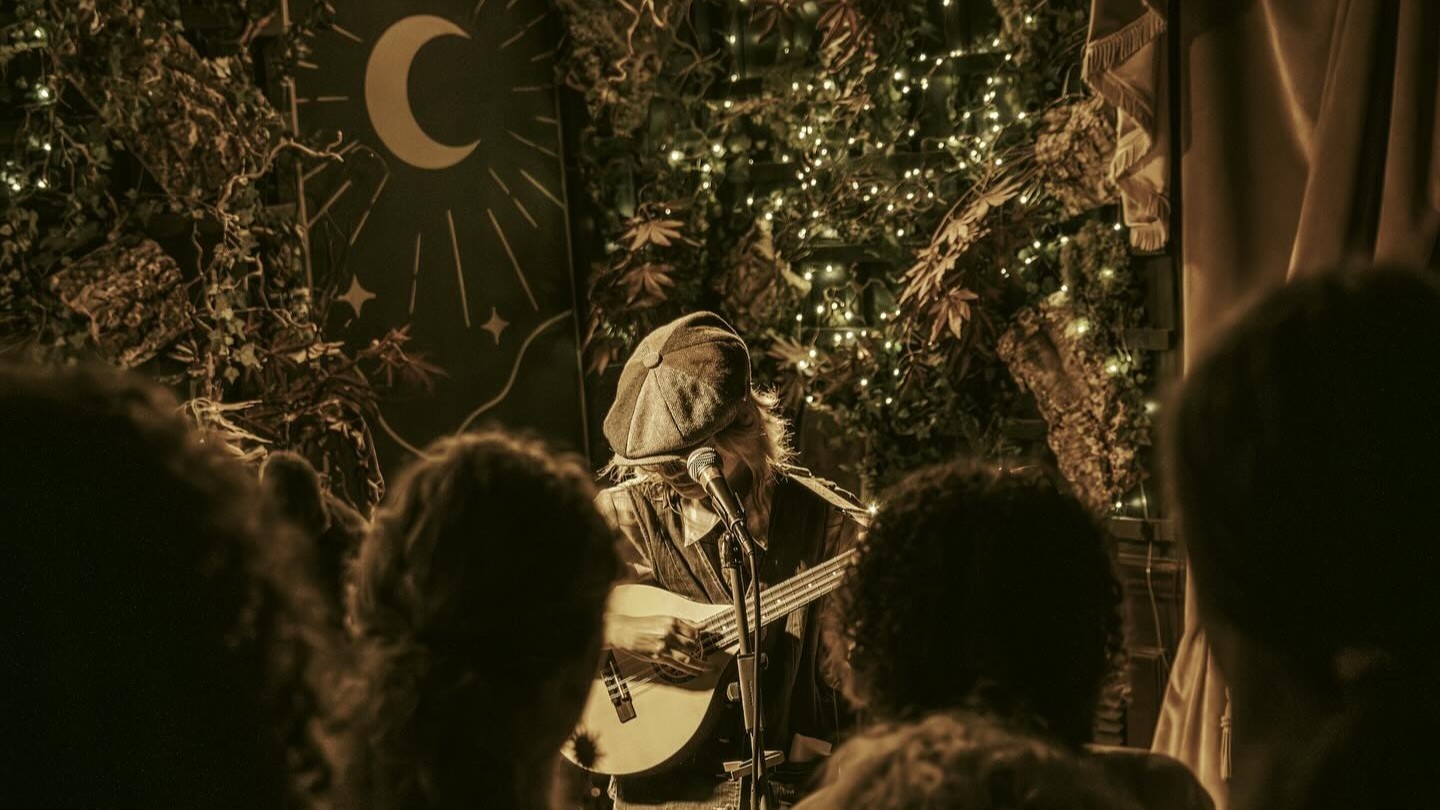
Image Credit: Keath Ósk
Note: Special Exhibit is a biweekly series I'm doing at Nutgraf, where we pick a single creative project at random to review every week. You get my unfiltered thoughts, personal opinion, and critique on everything from TV shows to magazine issues to Fortune 500 marketing campaigns. There are no rules when it comes to format, genre, industry, or tone. If you have requests for an IP you'd like to see critiqued, drop me a line at ritoban@nutgraf.press.
I've been thinking a lot lately about why modern music doesn't tell stories the way it used to. Sure, we have folk music, singer-songwriters, and musical theatre. But the idea of a solo artist building a complex, layered universe with worldbuilding and lore, like the folk minstrels of old, feels almost extinct.
We've traded wandering bards for concept albums. It's fine, I guess, but something's been lost.
Then I stumbled across Yaelokre.
You might already know Nordic folk artists like Aurora and SKÁLD, whose ethereal soundscapes have brought Scandinavian musical traditions to a global audience. But there's an artist you need on your radar right now, purely for how experimental their storytelling format is and how devoted a fandom has sprung up around it.
Filipino-Icelandic musician Keath Ósk, performing under the stage name Yaelokre, has created something I genuinely haven't seen before. It's a diary-turned-storybook that unfolds through illustrated music videos, fictional characters, and a community of fans who expand the narrative themselves.
Here's the thing about Yaelokre. It's been compared to everything from The Lord of the Rings to a blend of Gorillaz and Maurice Sendak's Where the Wild Things Are. And honestly? It isn't hyperbole.
This is storytelling that honors wonderment through song and illustration, performed by a cast of characters drawn from the artist's own childhood. It's the closest thing we have to a modern minstrel tradition, and I think more people should be paying attention.
Ballads, folk songs, and musical storytelling in Europe
The tradition of musical storytelling in Europe goes back centuries, and it started with wandering minstrels. These were basically the rock stars of the medieval world. Poets, musicians, and news reporters rolled into one.
From the 12th century onward, they roamed from town to town across Europe, bringing stories and entertainment to everyone from peasants to nobility. They sang ballads about love, war, and heroism, usually accompanying themselves on instruments like the lute, harp, or psaltery.
What strikes me about this period is how central storytelling was to the entire enterprise. Ballads weren't just entertainment. They were cultural memory encoded in melody.
Collections like the Child Ballads (compiled by Francis James Child in the late 19th century) preserved over 300 such songs from English and Scottish traditions, some predating the 16th century. These were essentially the podcasts of their time, if podcasts also doubled as history textbooks and moral instruction manuals.
By the Renaissance, the minstrel tradition began to decline. Opera, ballet, and printed materials displaced their role. But the influence endured through broadside ballads, then through the folk revivals led by figures like Cecil Sharp in Britain and Woody Guthrie in America.
The through-line has always been the same: music that carries a story. When I listen to modern narrative-driven artists, I hear echoes of performers who understood that a well-crafted tale, set to memorable melody, could transcend time and place.
Scandinavian folk-rock is experiencing a renaissance
Something interesting has been happening with Nordic folk music over the past few years. It's exploded in popularity far beyond Scandinavia, and not just in niche circles.
Artists like Norwegian singer-songwriter Aurora have pioneered what some call Nordic folk pop. It's traditional influences blended with modern production in a way that feels both ancient and immediate.
Her song "Runaway" became a viral phenomenon on TikTok, racking up over 300 million daily views for months as users within "Fantasytok," "Booktok," and "Cottagecoretok" communities created videos with it. There's clearly an appetite for this stuff.
Then there's SKÁLD, a French Nordic folk collective formed in 2018 that celebrates the tradition of Scandinavian skalds, the poets who performed at Viking courts. They sing primarily in Old Norse and other Scandinavian languages, using traditional instruments like the nyckelharpa, talharpa, and shamanic drums. Their albums explore Norse mythology and Viking lore, and they've drawn comparisons to Wardruna, who composed music for the History Channel's Vikings series.
With this global attention has come experimentation. Folk music is absorbing influences from pop, heavy metal, and electronic music.
Swedish artist Skott emerged from the tiny town of Vikarbyn, combining ethereal and electronic influences with her classical and folk background. The result is a generation of artists who treat folk not as a museum piece but as a living tradition. Capable of evolution while maintaining its storytelling roots.
This is the context in which Yaelokre appears. And Ósk pushes things even further by asking: what if the storytelling itself became interactive?
Yaelokre's multimedia format is one of its kind
Keath Ósk is a Filipino-Icelandic artist based in Iceland who started releasing music under the Yaelokre project in early 2024 with the single "Harpy Hare." The song, and its illustrated music video animated by Ósk themself, went viral on TikTok by July. It topped Spotify's Global Viral Songs Chart for nine consecutive days and entered the TikTok Billboard Top 50.
But what captured people wasn't just the music. It was the sheer depth of the world Ósk had built.
The project is set within Meadowlark, a fairy-tale world where four masked children known as The Lark perform musical fables. The characters are Cole Seymour, Clémente Dearworth, Kingsley, and Peregrine August. All four are voiced by Ósk.
They wear animal-themed masks and Renaissance-esque outfits, each representing different aspects of the creator's own childhood. Behind them looms the mythology of The Harkers: The Storyteller, the Bell-ringer, the Enkindled, and the Croon. These are wandering tale-tellers who serve as the face of fairytales within this universe.
What makes this genuinely innovative is how Ósk has transformed personal memoir into participatory mythology. The project has been described as a "diary-turned-storybook," exploring themes of childhood, identity, and queerness through a fantasy-fiction lens.
Ósk has stated that ethnicity and gender don't exist in Meadowlark's world. It's a creative choice that's resonated powerfully with fans, many of whom identify as queer youth finding representation in unexpected places.
And the fandom has responded in kind. Fans create "larksonas," original characters designed in the same style as The Lark, complete with animal masks and backstories that fit within Meadowlark's aesthetic. They draw art, write theories about the lore, recreate the choreography from music videos.
There's a dedicated fan wiki that documents character details and song meanings with the intensity usually reserved for franchises that have been around for decades. One fan described watching Yaelokre perform as feeling "like listening to a bard in a tavern." Wildly immersive. I think that's exactly right.
The industry has noticed. Billboard's Kristin Robinson compared Ósk's combination of illustrations and songs to the continuing revival of folk music. Philippine publications have hailed Yaelokre as representative of the future of Original Pilipino Music (OPM).
In late 2024, Yaelokre opened for Aurora during her What Happened to the Earth? tour stop in Manila. By 2025, Ósk had announced a world tour across North America and Europe, continuing to perform in character with masks and costumes that bring Meadowlark to life.
What you should explore next
If you're intrigued by Yaelokre, the best starting point is the official website (yaelokre.com), which serves as a portal into Meadowlark with character introductions and the artist's own commentary. The Yaelokre Wiki on Fandom is also comprehensive, maintained by fans who've catalogued every detail.
Both EPs, Hayfields (March 2024) and Songs of Origin, are on Spotify and YouTube, where the illustrated music videos add essential context.
And if Yaelokre captures your imagination, here are some other artists working in similar territory:
The Crane Wives are a Michigan-based indie folk-rock band whose narrative-driven songs have earned comparisons to The Decemberists. Their albums Coyote Stories and Foxlore weave interconnected tales about self-discovery and transformation, using vivid imagery and three-part vocal harmonies. Songs like "Curses" have gone viral on TikTok, with over 63 million Spotify streams. The band has cultivated a dedicated queer fanbase drawn to their transgressive storytelling.
Rabbitology is the project of Michigan-based singer-songwriter Nat Timmerman, who creates what she calls "midwestern gothic folktronica." Her debut EP Living Ghost builds an immersive world of metaphorical short stories, exploring themes of stagnancy, femininity, and queerness through fantastical imagery. Like Yaelokre, Rabbitology treats songwriting as world-building. Complete with soulmates who are physically bound together and organs that can be removed without death.
Juniper Vale (Sarah Jane Wood) pairs indie folk-pop music with illustrated comic books, telling stories about searching for the meaning of home. Her debut album accompanies a visual narrative about a girl and her turtle friend adventuring through an overgrown world. The project is part of a broader "concept art meets music" approach from Nashville's Vohnic Music label.
Each of these artists approaches musical storytelling differently. But they share a common conviction: music can be more than entertainment. It can be world-building, community creation, and a bridge between the performer's inner life and the listener's imagination.
Among scores of algorithmic playlists and three-minute livestreams, that's a radical proposition.
Yaelokre, with its masked minstrels and participatory fandom, might just be leading the way forward by looking back to where music began.